Click to invest now

mj.png)
It's easy to read the headlines and wonder whether the United States is still the right place to invest. Trade tensions. Political turbulence. A hawkish Federal Reserve. An ongoing war in the Middle East. For investors, especially those outside the U.S., the noise can be disorienting.
But there's a more useful lens than the headlines: follow the capital. And right now, the world's most sophisticated, longest-duration investors are not pulling back from U.S. real estate. They are accelerating into it.
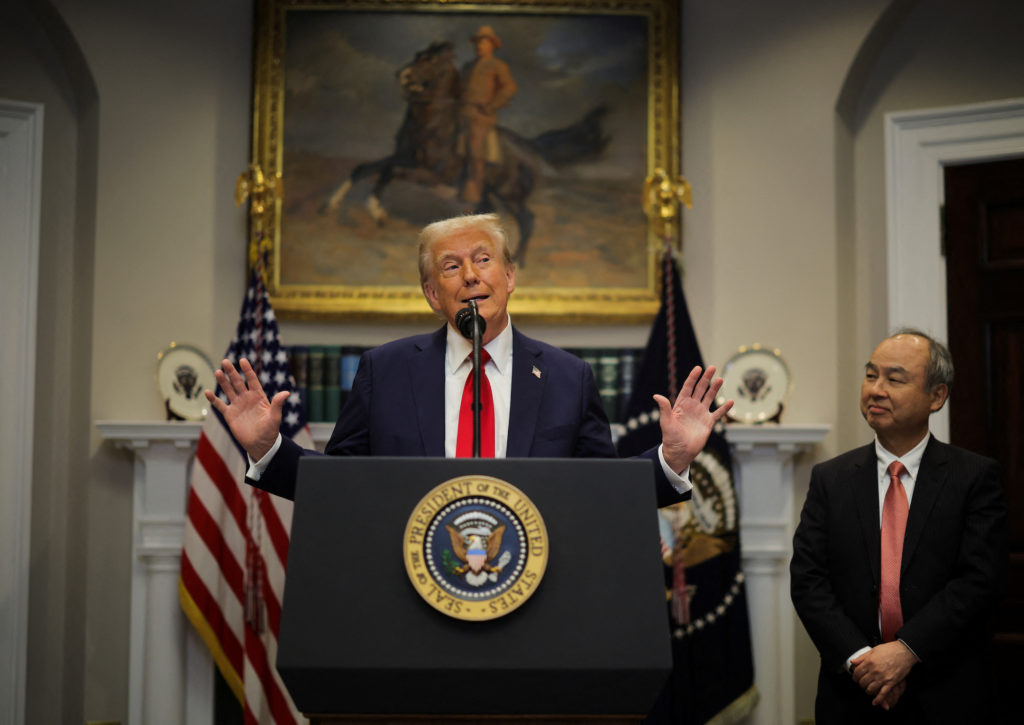
The clearest signal yet: Japan's biggest homebuilders have launched a multibillion-dollar acquisition spree across the U.S. housing market, a move that reflects a cold, calculated assessment of where the best long-term real estate investing opportunity in the world actually lives. For investors with concerns about U.S. political uncertainty, that signal deserves a close read.
Since 2020, Japanese homebuilding firms have announced or completed 23 acquisitions of U.S. single-family homebuilders, more than double the pace of the prior seven years, per the Wall Street Journal. The three largest players Daiwa House, Sekisui House, and Sumitomo Forestry are on track to collectively control nearly 6% of U.S. home construction (ResiClub). The scale of individual deals tells the story:
The motivation is explicit. As one industry analyst told CTASC.com: "The Japanese long-term demographics are less desirable than the long-term U.S. demographics. The successful Japanese builders, they are looking to allocate growth capital and they are looking at the best market in the world."
Japan's domestic population is shrinking and aging rapidly, creating a structural ceiling on domestic homebuilding revenue. The U.S., by contrast, continues to experience population growth, household formation, and a massive structural housing shortage, particularly in the Sun Belt markets where these firms are concentrating their acquisitions. Japanese companies also benefit from access to lower borrowing costs, giving them a capital cost advantage when making U.S. acquisitions.
Investor takeaway: When some of the world's most disciplined, long-horizon corporate investors deploy billions into U.S. housing, despite mortgage rate headwinds, political noise and all the uncertainty visible from outside, they are telling you something important about where the fundamental value lies.
In simple terms: Japan's biggest home construction companies are buying up American homebuilders as fast as they can. They're doing it because their own country is shrinking while America keeps growing. To them, the U.S. is simply the best place in the world to build a long-term housing business. That's a powerful endorsement from people who do this professionally.
For investors in Canada who are weighing whether political tensions make U.S. real estate riskier, the most relevant data point may be what other Canadian investors are actually doing, not what the headlines are saying.
The answer, per CBRE and Multi-Housing News: Canadians are still the largest foreign investors in U.S. multifamily real estate by a wide margin. In 2025, despite a trade dispute and tariff uncertainty, Canadian investors committed $1.6 billion to U.S. multifamily, representing 28% of all cross-border investment in the sector. Canada ranked as the second-largest source of cross-border capital for global property markets overall, and the U.S. captured 30% of all outbound Canadian CRE investment (MSCI data).
Leading that charge, Brookfield and QuadReal were among the biggest multifamily investors in the U.S. in 2025 (Multi-Housing News/CBRE). These firms have full visibility into the political landscape and full access to alternative global markets. They are choosing the U.S. anyway.
Historically, as Multifamily Dive's research noted, Canadian investors pour into U.S. real estate for structural reasons that don't disappear during political cycles: they hold enormous wealth relative to their domestic opportunity set, half the U.S. commercial real estate market sits within a half-hour flight of Toronto, and the two countries share similar legal structures, language, and market transparency. Those advantages don't evaporate when trade rhetoric heats up.
Investor takeaway: The most sophisticated Canadian capital is still allocating heavily to the U.S. The headline narrative of Canadian retreat from U.S. real estate does not match the actual capital flows. Following the money tells a different story than following the politics.
In simple terms: Even with all the tension between Canada and the U.S. right now, Canadian investors still put more money into U.S. apartments last year than any other country. The biggest Canadian investment firms Brookfield andQuadReal are choosing U.S. real estate over other options worldwide. That's a meaningful signal from investors who've done the analysis and made their choice.
The Japanese and Canadian data points are not outliers, they are consistent with a broader pattern across global institutional capital:
As Cushman & Wakefield's Royer put it: "Foreign investors lag domestic buyers on the way down, but they lead on the way back up." The data suggests we are firmly in the "back up" phase, and global capital is positioning accordingly.
Investor takeaway: The breadth of global capital flowing toward U.S. real estate reflects fiduciaries optimizing for long-term, risk-adjusted returns and finding that answer in U.S. multifamily apartments.
In simple terms: It's not just Japan. Nearly two-thirds of large global investment funds are looking at U.S. real estate right now, more than before the pandemic. Apartments are their top target. These careful, professional investors have weighed the risks and they're still choosing the U.S.
It's worth being direct about the concern. Some investors, particularly those in Canada, are genuinely asking whether the current U.S. political environment changes the investment thesis. The question deserves a serious answer.
The honest answer from people deploying real capital: political cycles are noise; structural fundamentals are signal. Here's how the professionals are framing it:
Investor takeaway: The investors moving forward are the majority, and they are doing so because the fundamentals of U.S. real estate, particularly multifamily apartments, are as strong as they have been in years.
In simple terms: U.S. politics are noisier than usual right now. But professional investors who manage money for pension funds and large institutions are still choosing U.S. real estate because the underlying reasons haven't changed: people need places to live, housing is undersupplied, and the U.S. economy keeps growing. Political headlines come and go. Housing demand doesn't.
The global capital story points directly at multifamily apartments as the most compelling U.S. real estate sector for foreign and domestic investors alike:
Investor takeaway: Global capital is not just coming to the U.S. ,it is coming to our markets and our asset class. That validation from the world's most sophisticated investors reinforces our thesis: value-add multifamily in Sun Belt growth markets is one of the most compelling long-term real estate investments available anywhere in the world.
In simple terms: The global investors pouring money into U.S. housing are mostly focused on the same Sun Belt cities and property types, apartments and homes in the South, where we invest. They're reaching the same conclusion we have: that's where the demand is, the growth is, and the best long-term value lies.
We recognize that the current Canada-U.S. relationship is more complicated than it has been in a generation. Tariffs, political rhetoric, and economic uncertainty are real. Those concerns are legitimate and deserve to be acknowledged, not dismissed.
A few things we think are important context:
In simple terms: We hear the concerns our Canadian investors have, and we take them seriously. But Canada's biggest, most sophisticated investors are still putting money to work in U.S. real estate, because the fundamental case for it hasn't changed. We're in the same markets, with the same strategy, built around the same durable truth: Americans need apartments, and there aren't enough of them.
The world's biggest, most careful investors are putting billions of dollars into U.S. housing right now, despite all the political uncertainty. Japan's homebuilders are buying up American companies at a record pace because they see the U.S. as the best housing market in the world. Canadian institutions are still the No. 1 foreign investor in U.S. apartments despite the tension between our two countries. And 65% of global investment funds are targeting U.S. real estate, more than before the pandemic. Political headlines create noise, but they don't change the fundamental facts: America keeps growing, Americans need places to live, and there aren't enough apartments to meet the demand. That's why we invest here and why the world's smartest money keeps coming back.
👉 If you’d like to be added to our investor list to see future opportunities like this one, please schedule a call with our team.


gbtr.png)
nh.png)

klo.png)
_war.png)
mkj%20(2).png)


ggj.png)

p.png)

ok.png)
-n%5D.png)